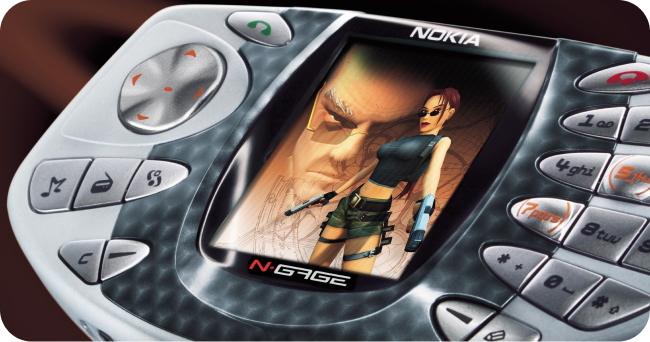
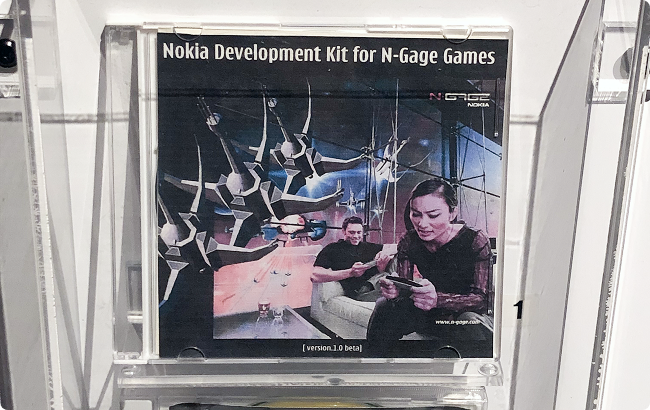
Why do I love flop stories so much? There’s this old Carol Dweck adage that says failures are stuffed with important information. The N-Gage flop is definitely full of that. That I found at Fantastinen floppi, an exhibition on the story of Nokia’s ill-fated device at Helsinki’s Tekniikan museo.
The time was late 2003. I was a teenager probably obsessing over Evanescence and still playing the GameCube. I do remember the device existed but do not have any real memories of it, which makes sense because the N-Gage didn’t have much relevance.
A portable gaming phone had never been attempted before, so Nokia was going into uncharted territory. Cell phones were still awkwardly transitioning into mini computers —the iPhone was four years away— so the N-Gage was ambitious for its moment.
Part of its failure came from awkward business decisions. The device was already designed and in production as a phone when it was pivoted to be also a gaming console. That explains the vertical screen and most of its hardware nonsense. Nokia was in a rush to venture into the gaming industry and compete with the Game Boy Advance, but it never stood a chance. The device ended up a strange hybrid that was memed as a phone and failed as a handheld, but a cult object twenty years later.
Innovation is by definition unsafe, and comes with its chance of weird results. Nokia not only confirmed later that their hardware decisions were bad, but that they had made a product for a phantom user: the N-Gage and its roster of games were going for the serious players, but serious players were not interested in playing serious games on a tiny screen.
Regardless of the outcome, flops carry intent. With flops of course intent never matches the results, and is this mismatch what makes them so enjoyable to dissect. But the real beauty of flops is that they usually generate unexpected outcomes. Foggy and immeasurable ones. Flops reconfigure collective paths, they make them non-linear. Flops make better plots.
The N-Gage failure was the success of Angry Birds many years later. The real outcomes from flops often reveal much later than the immediate, visible fail. The N-Gage was a commercial mess that contributed to Nokia’s decline, but in the aspiration of becoming a gaming brand and investing in its own games, Nokia inadvertently sort of founded Finland’s gaming industry and set the ground for future global hits.
Wonder what would have happened had Nokia conceived the device as a gaming console from the start. Or if they hadn’t gone after the cool gamers but into their own mobile gaming history to find an identity of a more casual gaming brand.
The intent behind a flop is usually never lost. They leave something in the air, like floating seeds, that will have an effect somehow and distant in time. And if they don’t, shaking paths can always count as an enough of a good outcome I guess.